Will the parking space work for your car?
Parking is more useful when you know where it is, how you reach it and whether your vehicle can actually use it.
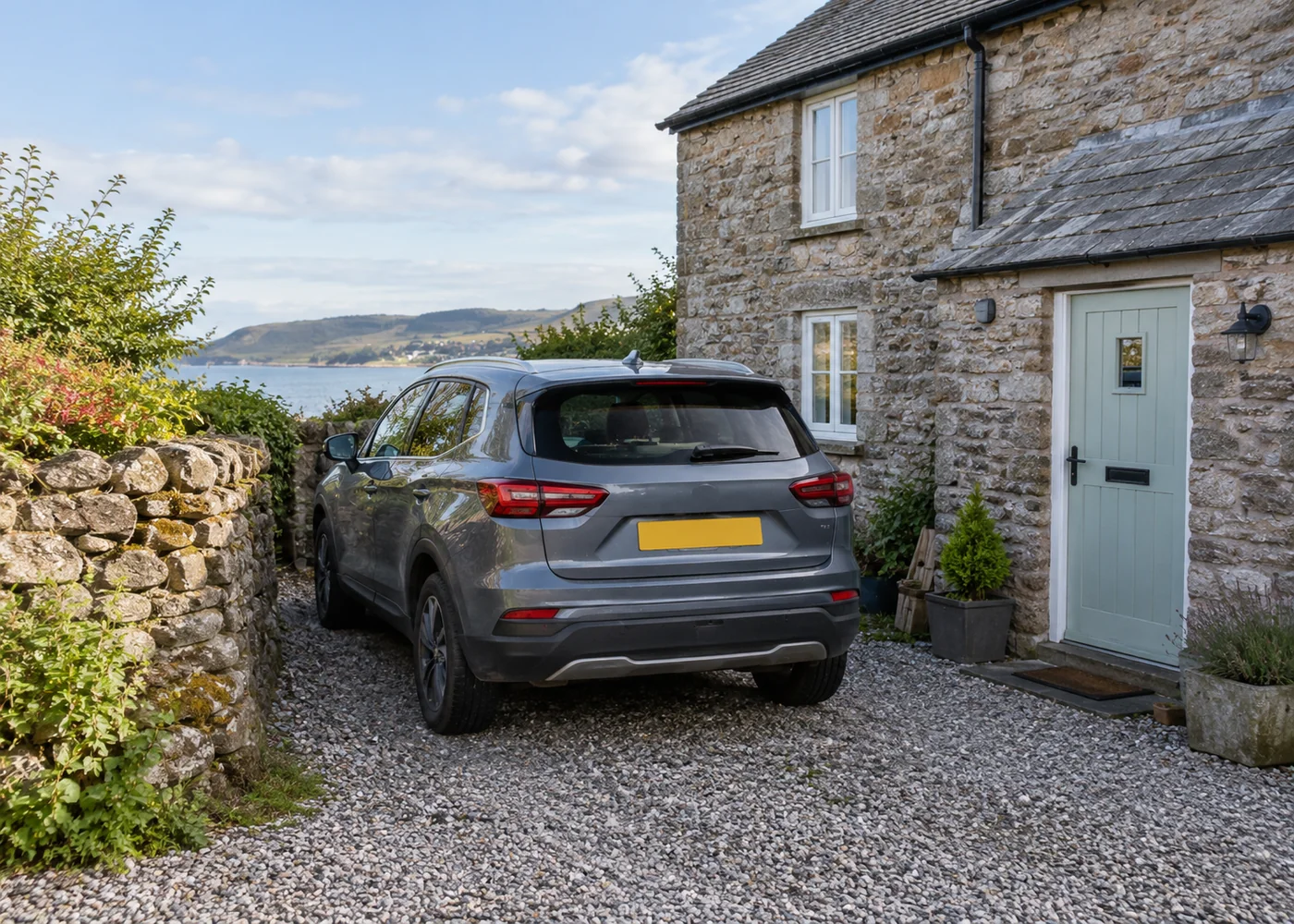
Distinguish the arrangements
A listing may offer a private driveway, an allocated bay, roadside parking or access to a nearby public car park. Those are different conveniences. Read the wording closely and ask for clarification if “parking available” is the only detail. In a busy village, availability beside the door may change during the day.
For an allocated space, find out which one belongs to the cottage and whether it is clearly marked. For roadside parking, ask about the usual distance from the entrance without treating the owner's experience as a guarantee. Check the current signs and any payment arrangements yourself when you arrive.
If two households are travelling separately, confirm the number of vehicles permitted. Space for two cars might mean tandem parking, with one blocking the other, rather than two independent bays. That may be fine if you share plans and inconvenient if one person leaves early each morning.
Match the space to your vehicle
Include passengers in the check. If a child seat is used, enough room to open the relevant door can be essential; if a person transfers equipment from the boot, the space behind the car matters. Tell the owner which clearance you need so that a technically adequate bay does not turn out to be impractical in everyday use.
Tell the owner if your car is unusually long, wide or high, or if you carry a roof box. Ask about narrow gates, low branches, covered entrances and turning space where relevant. A generous parking area can still have an awkward approach.
A photograph from the entrance helps explain the arrangement, but dimensions are more useful when clearance is close. Include the space needed to open doors and unload, rather than comparing only the vehicle's body width with the bay. Someone who needs extra room beside a door should make that requirement explicit.
Consider the surface as well. Gravel, grass and sloping ground can affect how easily people move from the car to the house. Ask what the route is like after rain and whether luggage must cross steps or an uneven path. These details belong in the accommodation decision, not just the driving plan.
Plan arrival without blocking anyone
Find out whether there is a temporary unloading position if the main parking is elsewhere. Use only a place the owner has identified, and avoid assuming a gateway or shared courtyard can be occupied while the whole group unpacks.
Save any arrival diagram with the directions. At the property, check that the designated space is clear and contact the manager if it is not. Parking in a neighbour's bay because it appears empty can turn a minor uncertainty into a problem.
For a walking-focused holiday, easy parking may mainly matter at the beginning and end. For a stay with frequent outings, it becomes part of every day. Choose accordingly: a short walk from a reliable space may work better than a tight driveway that makes each departure a negotiation.