How to report a cottage problem clearly
A useful message says what happened, where it happened and what help you need, without trying to diagnose more than you know.
Decide how urgent it is
For an immediate safety emergency, follow the property's emergency information and contact the appropriate emergency service. Do not wait for a routine booking message to be read.
For a non-emergency issue, use the manager's stated contact route. Check the guest information first if the problem could be a missing instruction, but do not continue using equipment that appears unsafe while searching for an answer.
Keep children and other guests away from an affected area where appropriate, and avoid attempting repairs or opening equipment.
Describe the actual situation
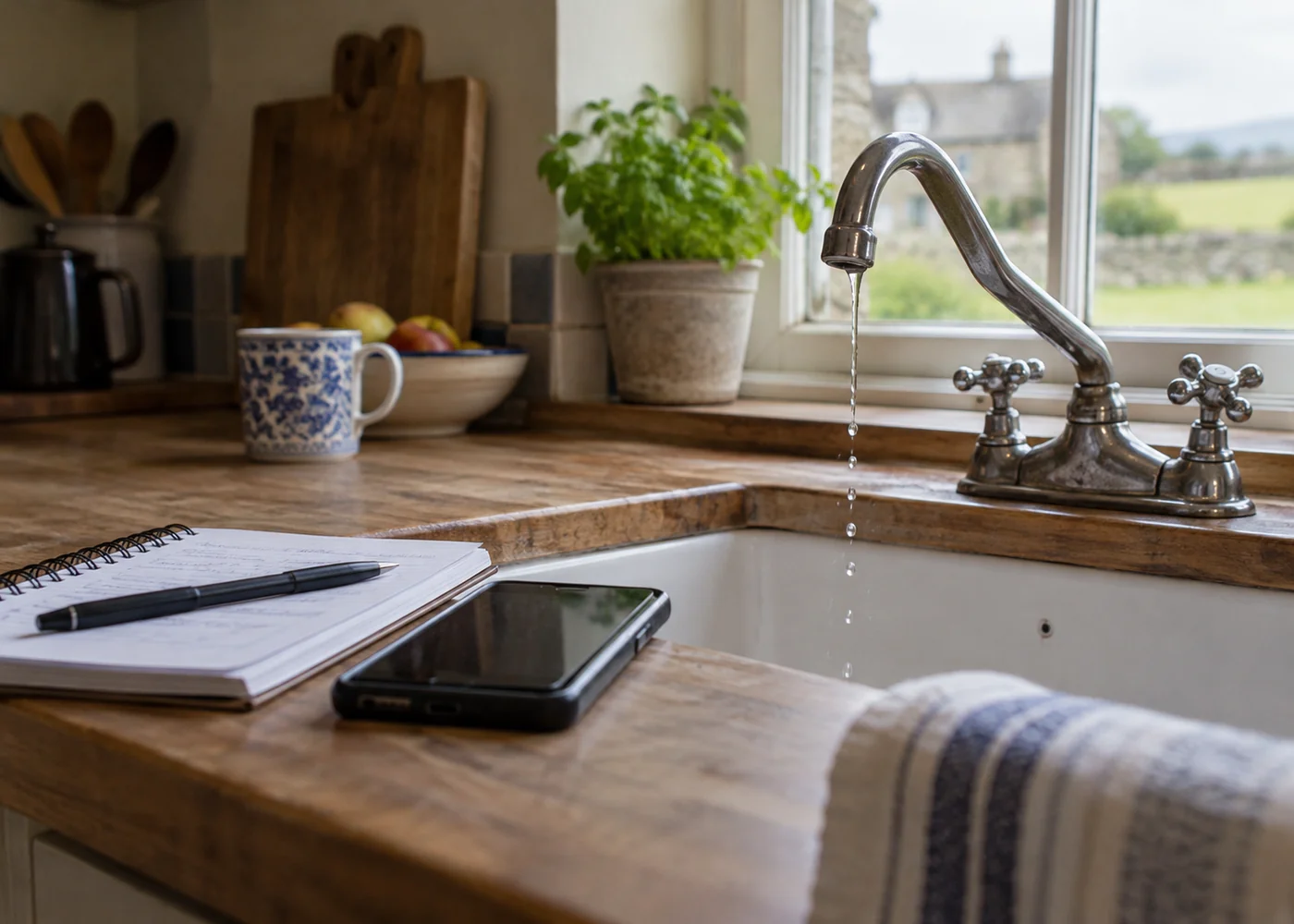
Identify the item or room and explain what is happening. “The kitchen tap continues to drip after closing normally” is more useful than “the plumbing is broken”. Include when you noticed it and any relevant display message.
Say what you have already done within the supplied instructions. Avoid a long sequence of experiments; that can make the original issue harder to understand and may introduce another problem.
A clear photograph can help show a visible fault. Keep it focused on the issue and avoid including personal documents, people or access codes unnecessarily.
Explain the practical effect
Tell the manager if the issue prevents a necessary activity, such as using the only shower or storing food appropriately. This helps them understand priority without exaggeration.
Ask what to do next and whether someone needs access to the property. Agree a practical arrangement through the normal channel, including any relevant times when the group will be out.
If a proposed workaround does not meet an essential need, explain that specifically. Clear communication is more useful than agreeing reluctantly and raising the same issue again later.
Keep a short record
Save the message and response, especially if the issue continues. Note the time and what changed after any authorised action. There is no need to turn every minor inconvenience into a large dossier.
Report problems during the stay when possible, giving the provider an opportunity to respond. A departure-only comment may be too late for a simple fix that would have improved the visit.
When the matter is resolved, confirm that briefly. If it remains unresolved, use the provider's stated process for further discussion rather than assuming a particular outcome.
The aim is a clear account and a workable response. Staying factual protects that aim better than either minimising a real problem or making claims about its cause that the available information does not support.