Organise a holiday fridge for several households
One fridge is easier to share when groceries are coordinated and everyone can identify what belongs to the group.
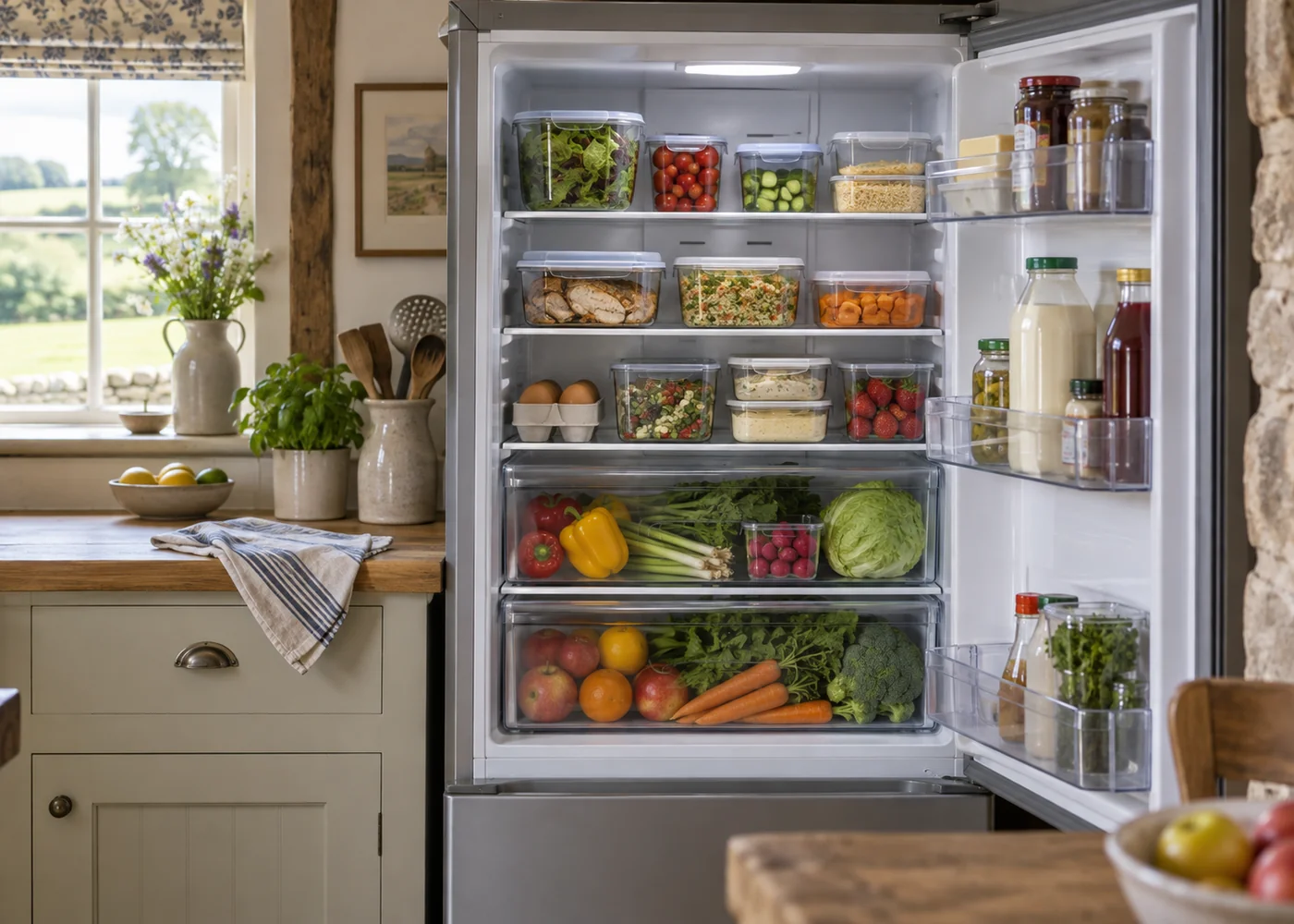
Shop for the space available
Check the appliance size before several households arrive with separate shops. A photograph may show a small under-counter fridge rather than the capacity people expect at home. Coordinate the first few meals and bring quantities that fit. For a longer stay, a second shopping trip may be more practical than trying to store everything on arrival.
Follow the storage instructions for the food and appropriate official food-safety guidance. Do not use a spare room, windowsill or outdoor box as an assumed substitute for required refrigeration. If the available storage cannot accommodate the plan properly, change the shopping plan. Holiday convenience does not make an unsuitable arrangement adequate.
Make ownership clear without overcomplicating it
Agree which items are communal and which are personal or needed for a particular meal. A labelled container or a simple note can prevent an ingredient disappearing into somebody else's lunch. Keep any dietary requirements clear to the people preparing food, and let those affected explain what separation or handling they need rather than guessing.
Avoid filling every shelf with oversized packaging. Use appropriate containers where suitable, keep necessary labels and do not decant something if that would make its contents or instructions unclear. Leave the appliance usable and follow its instructions. A fridge that cannot be closed or organised properly is telling you that the shopping needs to be reduced.
Reserve an agreed place for the next morning's essentials so they do not disappear behind bags brought by later arrivals. The aim is easy identification, not assigning a permanent shelf to each person regardless of space. Review what remains before another shopping trip, and ask before using something clearly set aside for another meal.
Clear it in stages before departure
Check what remains the evening before leaving and decide what each household will take. Follow the host's instructions about food left behind; do not assume someone wants half-used items because they look useful. Keep the return journey's storage needs in mind and follow relevant guidance rather than packing perishables casually among clothes.
After the last breakfast, inspect the drawers and door shelves as well as the obvious central space. Remove your food and deal with any spills using suitable methods. This small shared task is easier when ownership was clear from the beginning, and it prevents the organiser being left with a fridge full of unexplained containers.