A light meal plan for several people
A few agreed meals can make a group stay easier without turning every day into a catering schedule.
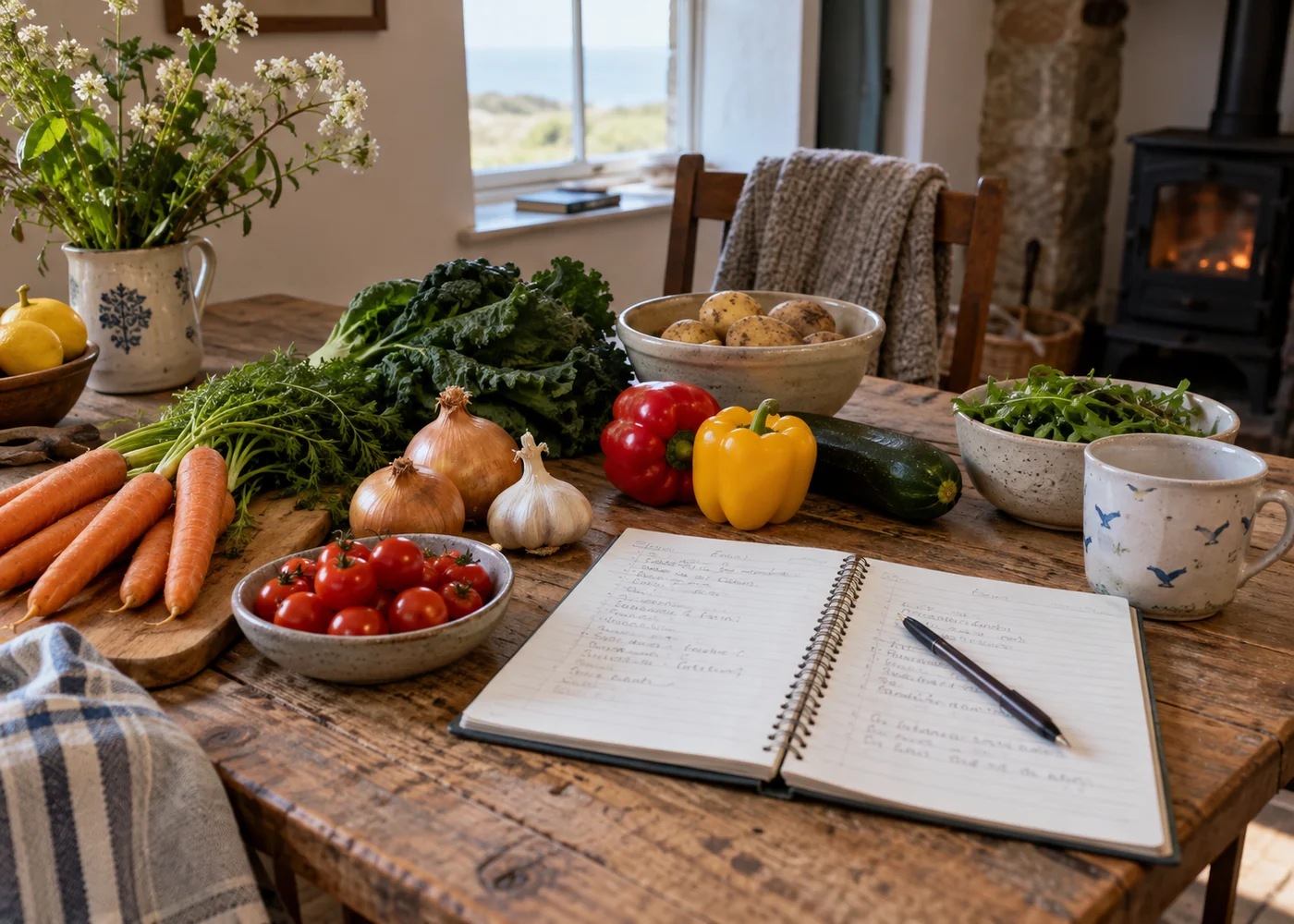
Agree the level of shared cooking
Start by asking how often people actually want to eat together at the cottage. Some groups enjoy cooking every evening; others want one shared dinner and freedom elsewhere. Clarify that before one person buys food for a plan nobody else imagined.
Collect dietary requirements and strong dislikes in a straightforward way. Keep any necessary details with the people preparing food, and do not improvise around an allergy or other established requirement.
Discuss how shopping and costs will be handled. A simple agreed method prevents one person's generous first shop from becoming an awkward assumption about the whole week.
Build around the kitchen
Check the pans, oven space, fridge and table before planning meals that need all of them at once. Choose dishes that fit the equipment and the number of people, rather than scaling up a recipe without considering its practical demands.
A main dish with flexible sides can be easier than several separate menus. Where needs differ, keep ingredients separate as appropriate and follow relevant food-safety practices. Simplicity should not mean disregarding someone's requirements.
Leave at least one evening uncommitted. An outing may run late, the weather may encourage a different plan, or people may simply prefer something lighter.
Share the work visibly
For a meal cooked by someone who enjoys cooking, ask what help would actually be useful. Unrequested assistance can crowd the room or interrupt a sequence. Setting the table and taking over the clearing afterwards may be a more welcome contribution than adding another person at the chopping board. The division should reflect people's preferences as well as equal effort.
Decide who is cooking and who is clearing up for a meal rather than allowing the same person to drift into every task. People can contribute differently: shopping, preparing vegetables, setting the table or washing up.
Keep the kitchen from becoming crowded. In a small room, two people working while others handle tasks elsewhere may be easier than everyone trying to help at the hob.
A written note of the next shared meal can be useful, but there is no need for a timetable covering every snack. Keep the plan easy to change.
Shop in useful amounts
Use ingredients that can support more than one meal without making every dinner identical. Check what has already been bought before adding another packet or jar.
As departure approaches, review what remains and adjust the final meal sensibly. Follow storage instructions and discard anything unsuitable; using food up is not a reason to take risks.
The best shared meal plan removes a few recurring questions. It should help people sit down together, not make them feel they have joined a rota-heavy household for the week. Enough agreement to share the effort, with enough space for the day to change, is usually a comfortable balance.