When another household is on the same property
A cottage within a larger property can offer a lovely setting. Clarify which spaces and routes belong to whom.
Draw the boundaries in words
Ask whether the accommodation is detached, attached to the owner's home or one of several holiday units. Then identify the entrance, parking, garden and any shared facilities. These distinctions matter more than the general label “private cottage”.
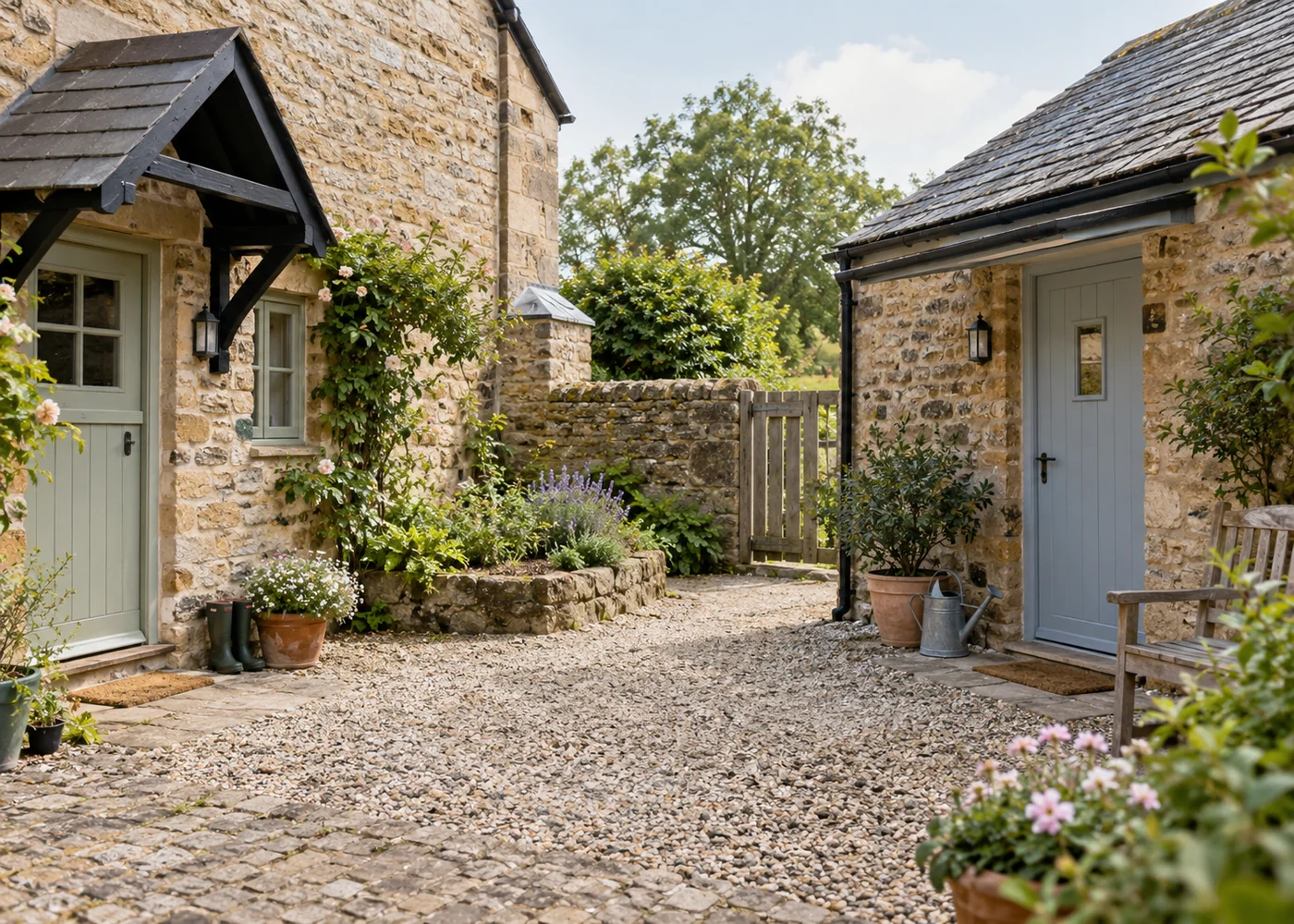
A dedicated patio may sit beside a communal lawn. A private front door may open onto a courtyard other guests cross. Neither arrangement is inherently inconvenient, but both are worth understanding before choosing a place for secluded outdoor time.
Look at the route from parking to the door and from the door to the garden. If either passes another household's windows or seating area, consider how that fits your expectations. A simple site plan or wider photograph can explain relationships that interior pictures cannot.
Know how shared facilities work
Where a laundry room, games room or charging point is shared, ask about access and booking arrangements. “Available” does not always mean available whenever you want it. If a particular facility is important, establish how guests normally use it.
Check whether each unit has its own outdoor furniture and storage. Moving a chair that belongs to another cottage or using an apparently empty barbecue can cause avoidable confusion. Once there, follow the labels and instructions rather than relying on what happens to be unoccupied.
Shared access also affects practical routines. Keep gates and passageways as instructed, and do not leave bags in a communal entrance while unpacking. If children or dogs are travelling, explain the relevant boundaries to everyone from the beginning.
Balance company and privacy
Some visitors enjoy having an owner nearby to answer questions. Others would rather have more separation. Ask how contact normally works and whether the owner uses any adjoining areas during guest stays. A clear explanation is usually enough to decide whether the arrangement suits you.
Think about sound and sight lines as well as physical access. An exclusive garden may still be overlooked, while a shared courtyard can be quiet and spacious. Photographs alone rarely settle those questions.
Choose the property for its actual arrangement rather than treating shared space as either a flaw or an advantage in itself. For a group booking several cottages, a courtyard may be ideal. For a couple seeking a secluded retreat, another layout may work better. Understanding the boundaries lets you enjoy what the setting offers without discovering an unwelcome surprise over the first breakfast outside.