Cook comfortably in a small holiday kitchen
A compact kitchen works best when the meal is chosen around its space, rather than asking every surface and pan to work at once.
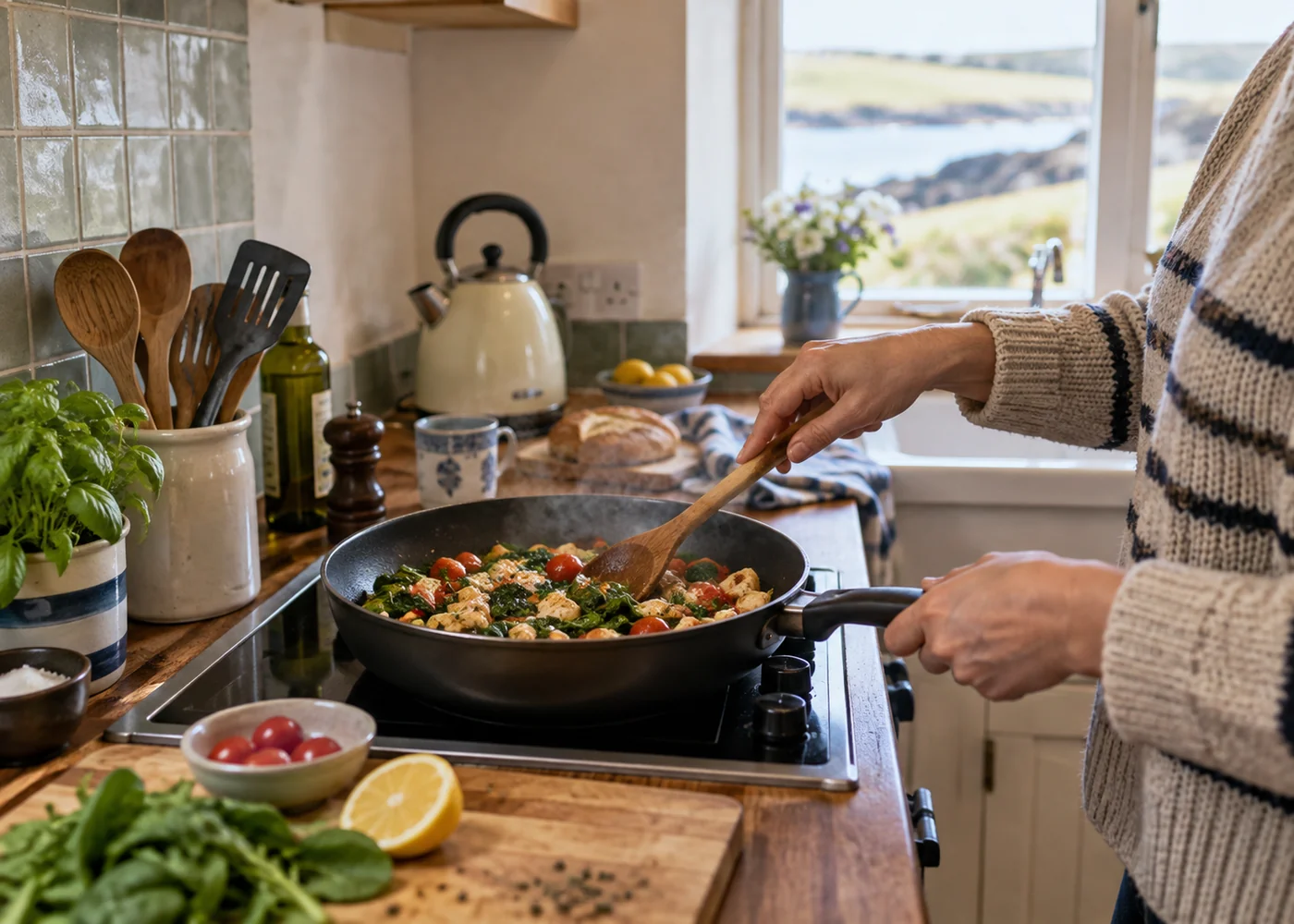
Meet the kitchen before filling it
Identify the hob, oven, sink and clear preparation area. Read the relevant appliance instructions and locate the basic pans and utensils. Put groceries into available storage so that the worktop remains usable.
Choose one place for chopping and another for ingredients waiting to be used, if the room allows. Keep the route past the cooking area clear. A crowded floor or a bag hanging from a handle makes a small kitchen harder to work in.
Check the dining table as a possible place for non-hazardous preparation or assembling cold food, using appropriate protection and hygiene. It should not become an improvised place for hot appliances or unsuitable cooking equipment.
Reduce simultaneous tasks
Read the whole recipe before beginning if you are using one. A short ingredient list can still require a blender, several baking dishes or a stage of cooling that occupies the only clear surface. Choose a different recipe when its hidden demands exceed the kitchen. It is easier to change direction while ingredients remain in their packaging than after half the meal is spread across the worktop.
A meal with one main cooked component and simple accompaniments is often easier than three dishes that all finish together. Think about what can be prepared first, what can wait appropriately and what needs your attention at the last moment.
A tray-based meal may reduce hob use if the oven and cookware are suitable. A one-pan dish may suit a modest hob. Choose the method that matches the actual equipment, and follow food-safety guidance rather than leaving prepared food at unsuitable temperatures while juggling tasks.
Do not overfill a pan merely because there are more people to feed. Cook in manageable amounts or choose a different dish. Handling a heavy, crowded vessel in a confined space can turn a simple dinner into an awkward operation.
Let fewer people cook
In a narrow kitchen, one or two people may work more comfortably than the whole group. Others can set the table, organise drinks or clear space elsewhere. Helping does not have to mean standing beside the hob.
Agree who is doing what before starting a busy meal. A brief division of tasks avoids two people reaching for the same sink or moving a pan someone else is using.
Keep children and pets appropriately supervised and away from hazardous cooking activity. A small room can have fewer clear separation areas, which makes attention to the actual layout important.
Clear as you go without chasing perfection
Wash or put aside a used board once it is no longer needed, following appropriate hygiene. Return ingredients to storage when their part of the meal is finished. A small amount of ongoing clearing can release the surface needed for the next task.
Do not try to wash every item while cooking needs attention. Put hot cookware somewhere suitable and stable, and leave enough space around the hob. The aim is an orderly sequence, not a spotless room at every moment.
If there is a compact dishwasher, understand what it can take and what must be washed separately. Avoid filling the only sink with soaking items when you still need it for the meal.
Shop for flexibility
Buy ingredients that suit several simple uses so a change in plans does not strand a complicated recipe. Keep the first shop modest until you understand the fridge and cupboard space.
For example, a few vegetables, an appropriate protein source and a staple can support different straightforward meals without needing a large collection of specialist ingredients. Choose according to the group's dietary needs and preferences rather than treating any example as a universal menu.
Use up suitable food thoughtfully as the stay progresses, while following storage and safety instructions. A smaller kitchen benefits from knowing what is there; duplicate half-used packages consume space as well as attention.
Serve in a way that fits
If the table is small, use an appropriate nearby surface for serving dishes rather than crowding every item between place settings. Keep hot items on suitable protection and out of routes where they could be knocked.
For a group, plating in the kitchen may sometimes be easier than placing several large dishes on the table. At other times, one shared dish reduces trips. Let the room guide the choice.
Keep the meal itself relaxed. People do not need a restaurant sequence to enjoy eating together, and a simple dinner can be particularly welcome after a long day outdoors.
Notice when to change the plan
If the equipment cannot safely support what you intended, simplify or choose another meal. Do not use decorative dishes for cooking, put unsuitable handles in the oven or improvise electrical arrangements.
Ask the manager about a specifically promised item that seems missing. Otherwise, accept that a holiday kitchen may have a different selection from home and cook within it.
A small kitchen can be entirely adequate for a good stay. Its limits become manageable when shopping, preparation and serving are treated as one practical sequence rather than separate demands competing for the same patch of worktop.