Where will the bags and coats go?
A little empty storage can make a small cottage feel much easier to live in.
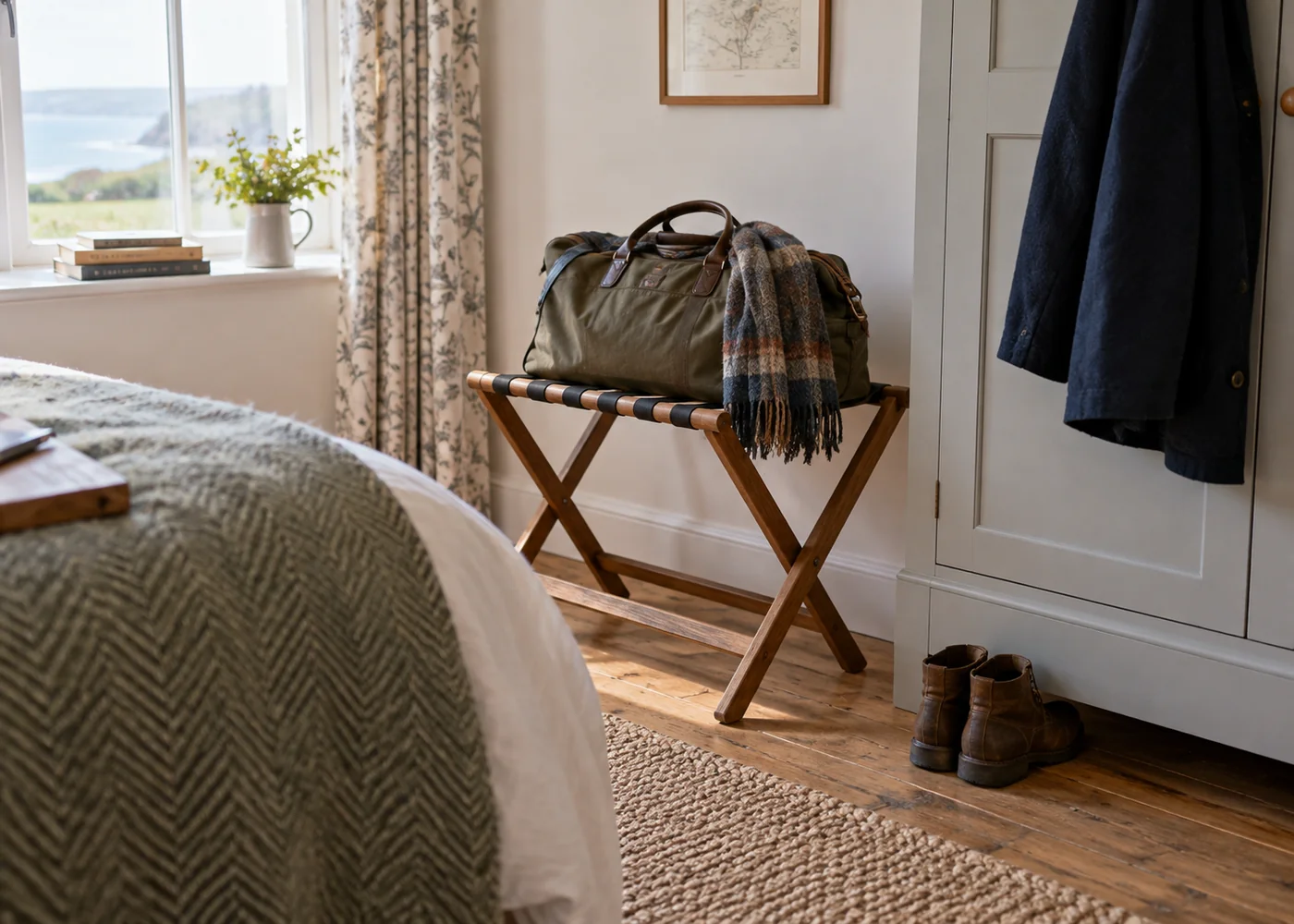
Follow the luggage
Look for a place to put an open bag that is not the bed or the only walking route. A luggage rack is useful, but a clear floor area or accessible shelf can work just as well. In an attic bedroom, check whether the space beside the bed is usable standing up; a photograph may hide the effect of a sloping ceiling.
Wardrobes sometimes appear generous from the outside while containing spare bedding or the owner's stored items. If you are staying more than a few nights, ask what storage is available for guests. You do not need a precise shelf count, just enough information to know whether clothes can leave the suitcase.
Give everyday items a home
Coats, shoes and shopping bags create more clutter than neatly packed clothing. Look for hooks or a porch near the entrance, especially if the holiday involves walking. A space for outdoor items helps keep them away from bedroom floors and upholstered furniture.
In the kitchen, an empty cupboard is often more valuable than another appliance. Food bought for a week can occupy most of a small worktop if there is no guest storage. In the bathroom, check for a shelf or other suitable place for washbags so that they do not have to sit on a wet floor.
Pack to fit
Soft bags are sometimes easier to store than rigid cases, but choose luggage you can carry comfortably and that protects what is inside. Do not bring containers simply because a packing list suggests them. A few reusable bags can separate clean clothing, laundry and groceries without adding much bulk.
Once at the cottage, unpack the items you use daily and keep departure-only things together. Leave locked cupboards alone and avoid using cupboards that appear reserved for maintenance supplies. Enough storage is not about replicating home; it is about being able to make breakfast, get dressed and find your keys without moving the same bag repeatedly.