Ask about summer bedroom comfort before booking
Ask about the room's layout, shading and ventilation before a summer booking, particularly when photographs focus on bedding rather than how the room feels through the day.
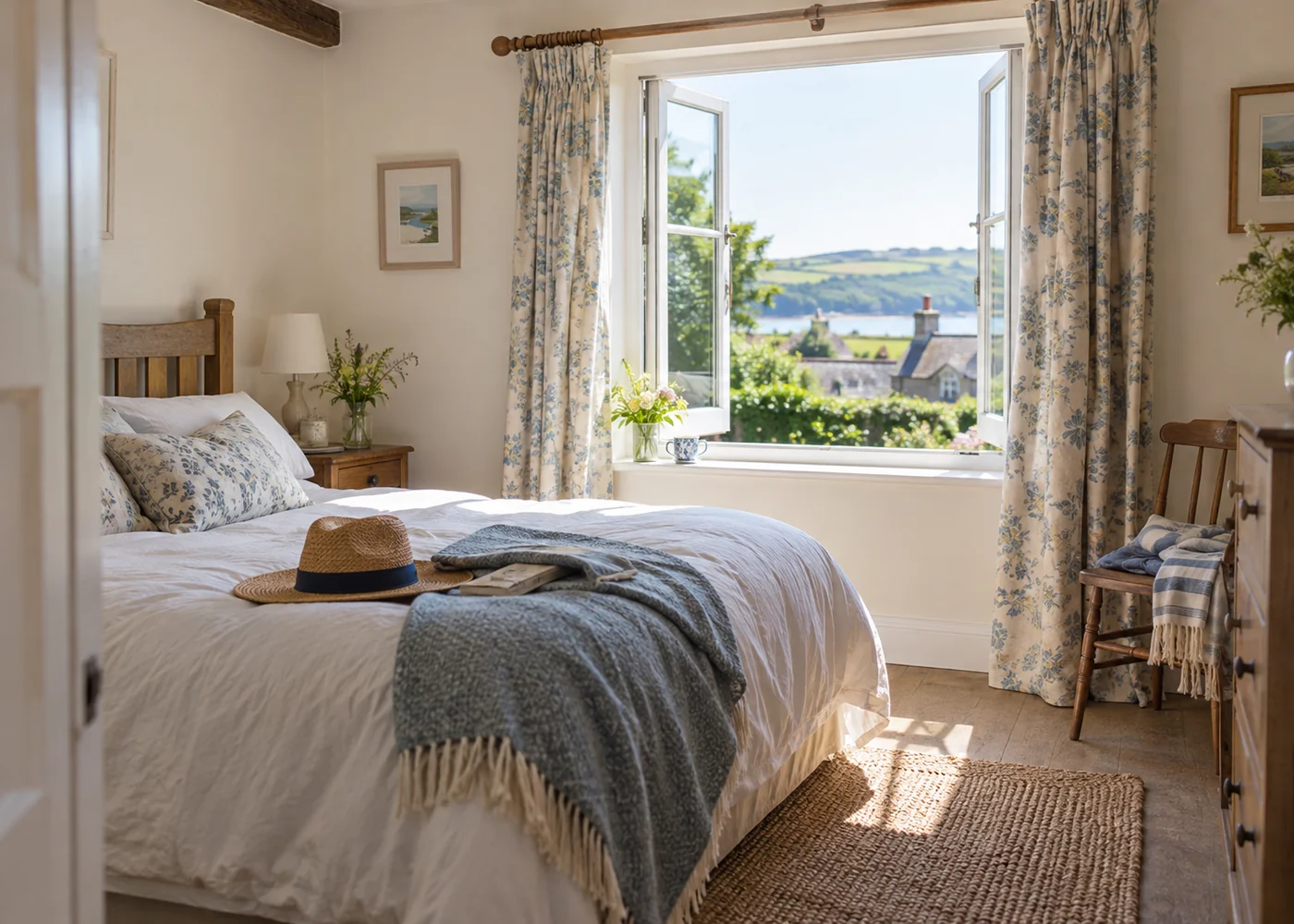
Find out which room you will use
Look at the actual bedroom allocation rather than a general photograph of the property. An upper room under the roof, a ground-floor room and a bedroom with large sun-facing windows may offer different conditions. Ask the host to describe the room and its controls without requesting a guarantee about weather. You need practical information that helps you decide, not a promise that every summer night will be cool.
Check whether windows open and what blinds or curtains are provided. A decorative curtain in a photograph may not cover the whole window, and an unusual rooflight may have a different opening arrangement. Ask if this matters to your group. Follow the property's instructions and consider the needs of children or others using the room rather than assuming any open window is an appropriate solution.
If a fan or air conditioning is listed, confirm what is actually available and where it is used. Do not infer whole-house cooling from one photographed appliance. Equally, avoid choosing a property on the assumption that you can bring or install equipment without asking. The host can explain the supplied facilities; your booking decision should reflect those facilities as they stand.
For a group booking, let the people using the bedrooms see this information before rooms are allocated. Someone who values a quieter or more shaded room may prefer it to the largest bedroom. Discuss those preferences alongside access and bed requirements, without assuming everyone ranks the rooms in the same order. The useful outcome is a sensible match between people and spaces, with no promise that the weather or the building can be controlled perfectly.
Think about daytime heat as well as bedtime
The Met Office advises that closing curtains or blinds in sun-facing rooms can help reduce indoor heat gain. In a holiday property, use the provided controls appropriately and follow current official hot-weather guidance when conditions require it. Do not improvise coverings, obstruct equipment or alter fittings. A small amount of informed routine is more useful than trying an untested cooling trick after the room has become uncomfortable.
Ask how the host recommends using the room's normal ventilation and shading. There may be specific instructions for roof windows, shutters or other features. Make those instructions available to the people sleeping there so one person is not repeatedly correcting another's assumptions. If something is broken or does not operate as described, report it promptly rather than forcing the fitting.
Consider where the group will spend the warmer part of the day. A shaded sitting area or another comfortable room can be useful, but only if it is actually available to your booking. Do not rely on a garden photograph taken at a different time of day to prove there will be shade when you need it. Ask a factual question about the layout and choose a plan appropriate to current conditions.
Pack modestly and avoid assumptions
Check the bedding supplied and whether there are suitable alternatives if the standard set does not meet your preference. Do not remove protective covers or use linen in a way contrary to the house instructions. A simple question before arrival can clarify what is available without filling the car with unnecessary bedding. Keep luggage from obstructing the normal route around the bed or access to controls.
For guests whose health makes temperature particularly important, seek relevant professional advice and choose accommodation accordingly. A general travel article cannot establish safe conditions for an individual. Tell the host the practical facility you need to verify without expecting them to provide medical judgement. If an essential requirement cannot be confirmed, another property may be the better choice.
Keep drinking water and ordinary essentials easy to reach, while following any personal care guidance that applies. Avoid turning the bedroom into a collection of improvised devices or cables. Supplied equipment should be used according to its instructions, with clear space and suitable placement. If you need advice about the appliance, ask rather than relying on an online shortcut.
Let the evening routine help
Avoid crowding a small bedroom with several people while someone is trying to settle for the night. Use the main living area for shared conversation and keep the sleeping space available for its purpose. Consider noise and light as well as warmth, especially when summer evenings encourage some guests to stay up later than others.
Check current weather information during the stay and adjust plans when necessary. A room that is comfortable in ordinary conditions may feel different during a hot spell, just as the outdoor itinerary may need to change. Follow authoritative advice for the situation rather than assuming a holiday should continue exactly as planned.
When comparing cottages, treat summer comfort as a collection of usable features: the room's position, appropriate shading, working ventilation and any confirmed equipment. Attractive linen is pleasant, but it does not answer those questions. A few specific enquiries give you a more realistic basis for choosing where the group will sleep.