Keep a school-holiday cottage week manageable
A cottage week during the school holidays works best with a few dependable routines and enough flexibility to avoid organising every hour.
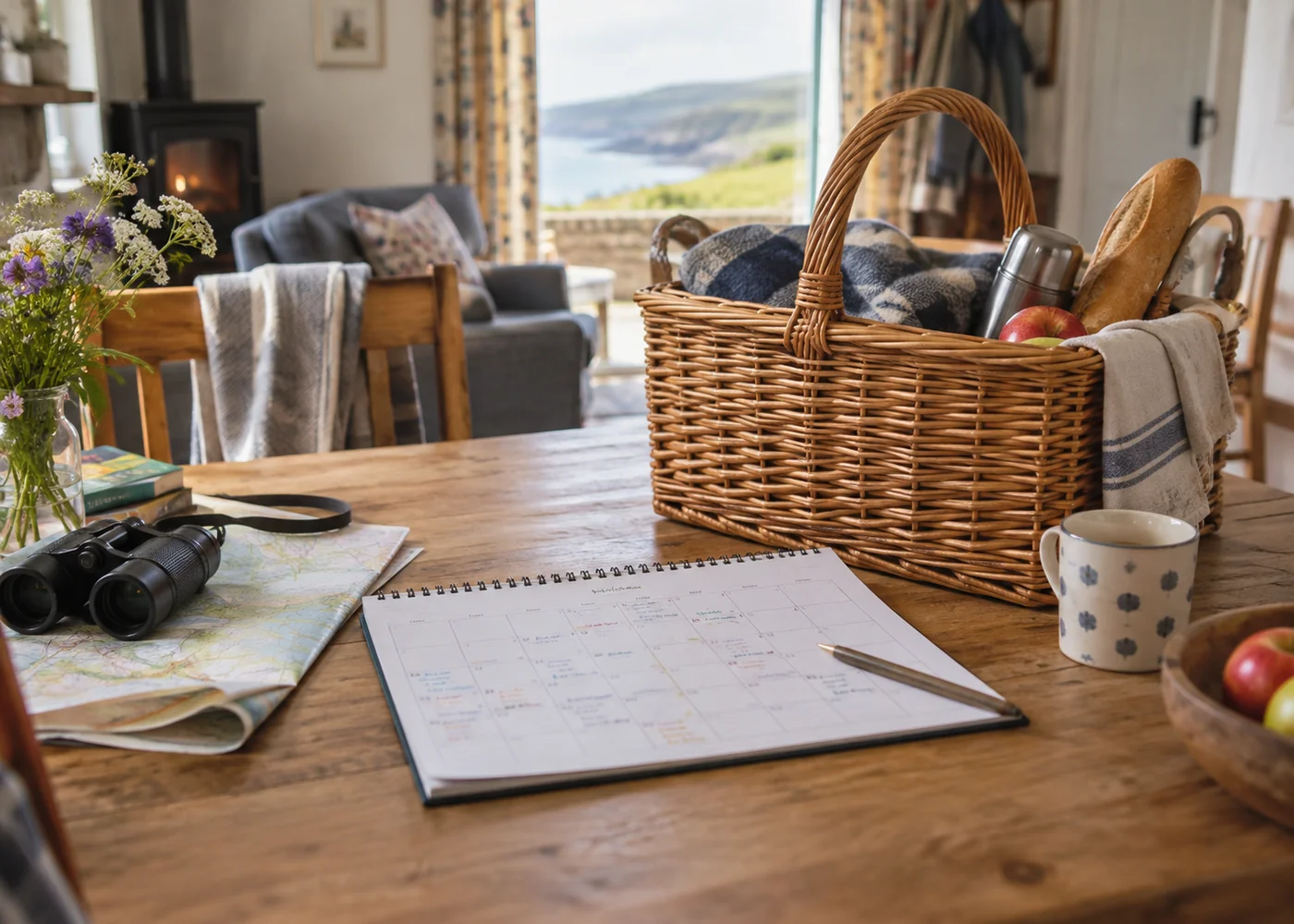
Choose a base that can hold an ordinary day
Look at the living space, not just the nearby attractions. Families will still have breakfast, need places for wet shoes and sometimes spend an afternoon inside. A practical table, comfortable seats and usable storage may matter more than an extra decorative room. Check the bedroom arrangement and any facilities essential to your family before booking, rather than relying on a general family-friendly description.
Consider the journey and arrival timing as part of the week's pace. A late start to the first evening is easier with food already planned and essentials accessible. Do not schedule the first substantial outing so early that settling into the cottage becomes a race. The week is long enough to begin with an ordinary morning and still leave plenty of time for the main plans.
Agree a budget for activities and meals before everyone starts choosing. Let children contribute ideas within real limits, and be clear about what is a possibility rather than a promise. A cottage can support enjoyable low-key days as well as paid outings. You do not need to match every day with a ticketed attraction for the holiday to feel worthwhile.
Give the week a loose shape
Choose a few anchor activities and check their current booking requirements. Space them out where possible so travel-heavy days do not accumulate. Leave other days open to the weather, energy and interests of the group. A plan with gaps can accommodate a favourite place visited twice or a day that turns out better spent near the cottage.
Do not interpret a gap as a failure to organise. Children may enjoy familiar play, reading or time in the garden when the space is suitable and supervised as needed. Adults may also appreciate not packing a bag and loading the car every morning. The holiday's rhythm can alternate between outings and staying put without one kind of day being presented as the worthwhile one.
Keep current opening times and access information for the important plans, preferably from the venue itself. Avoid relying on a saved page from a previous season. If a plan changes, choose an alternative that suits the day rather than attempting to reproduce the original experience at any cost. A smaller local visit can be more enjoyable than a long detour made because something must replace the cancelled booking.
Make food and equipment repeatable
Arrange breakfast and a few easy meals around the kitchen you have. Coordinate shopping with anyone sharing the property and leave enough storage space for what needs it. Buying the whole week's groceries immediately may not suit the fridge or the way plans evolve. A modest start and a later top-up can reduce clutter and unnecessary leftovers.
Give everyday items a home: shoes, coats, beach or walking equipment, chargers and activity bags. Explain the arrangement to the children and let them help keep their own things together in an age-appropriate way. Repacking the same bag from scattered objects every morning is an avoidable drain on time. A small reset after an outing makes the next one easier.
Share preparation and clearing up between adults. One person should not have to plan every meal, locate every missing item and remember every booking while others experience an uninterrupted break. Name a few responsibilities rather than offering vague help. If the week includes time apart, agree care arrangements explicitly so free time is genuinely available to everyone.
Keep the second half lighter than the first plan suggests
After a few days, review what the family is enjoying. You may want more of the cottage and fewer outings, or discover one type of activity works particularly well. Adjust without treating the original itinerary as a contract. The ability to change is one of the useful features of having a stable base for several nights.
Begin thinking about departure before the final evening. Use remaining food appropriately, gather small belongings and deal with laundry or wet kit according to the host's facilities and instructions. This need not dominate the last day; a few decisions in advance can preserve it as holiday time rather than a long preparation for checkout.
Leave with an understanding of what helped rather than a score of how many places you visited. A workable bedroom layout, a simple breakfast routine or a garden everyone enjoyed may be the feature to prioritise next time. The best cottage week is one whose everyday arrangements leave enough energy for the people and places you came to enjoy.