Sharing a cottage with two dogs
Two dogs bring two sets of habits. Look at the available space and everyday routines rather than assuming that a two-dog allowance answers everything.
Confirm the booking for both dogs
Check that the allowance applies to your actual booking, including any size conditions and charges. A listing may allow two dogs in one property but not in another on the same site. Describe the dogs accurately and keep the confirmation with the holiday details. If friends are bringing the second dog, agree who will handle the communication so the host receives one clear account rather than separate assumptions.
Think about how the dogs already spend time together. Dogs that meet happily on walks may not be used to sharing a small kitchen, food area or sleeping room. Do not treat a holiday house as a convenient trial of a new living arrangement. Where there are known concerns, discuss the plan with an appropriately qualified professional before booking, and choose a different arrangement if the space cannot meet those needs.
Look for ordinary separation
A second room can be useful even when the dogs get on well. It gives you options during meals, cleaning and quiet time. Check whether doors actually divide the living area or whether the photographs show one large open-plan space from several angles. A wide room is not necessarily easier to manage than two modest rooms connected by a door, especially when people are moving through with food.
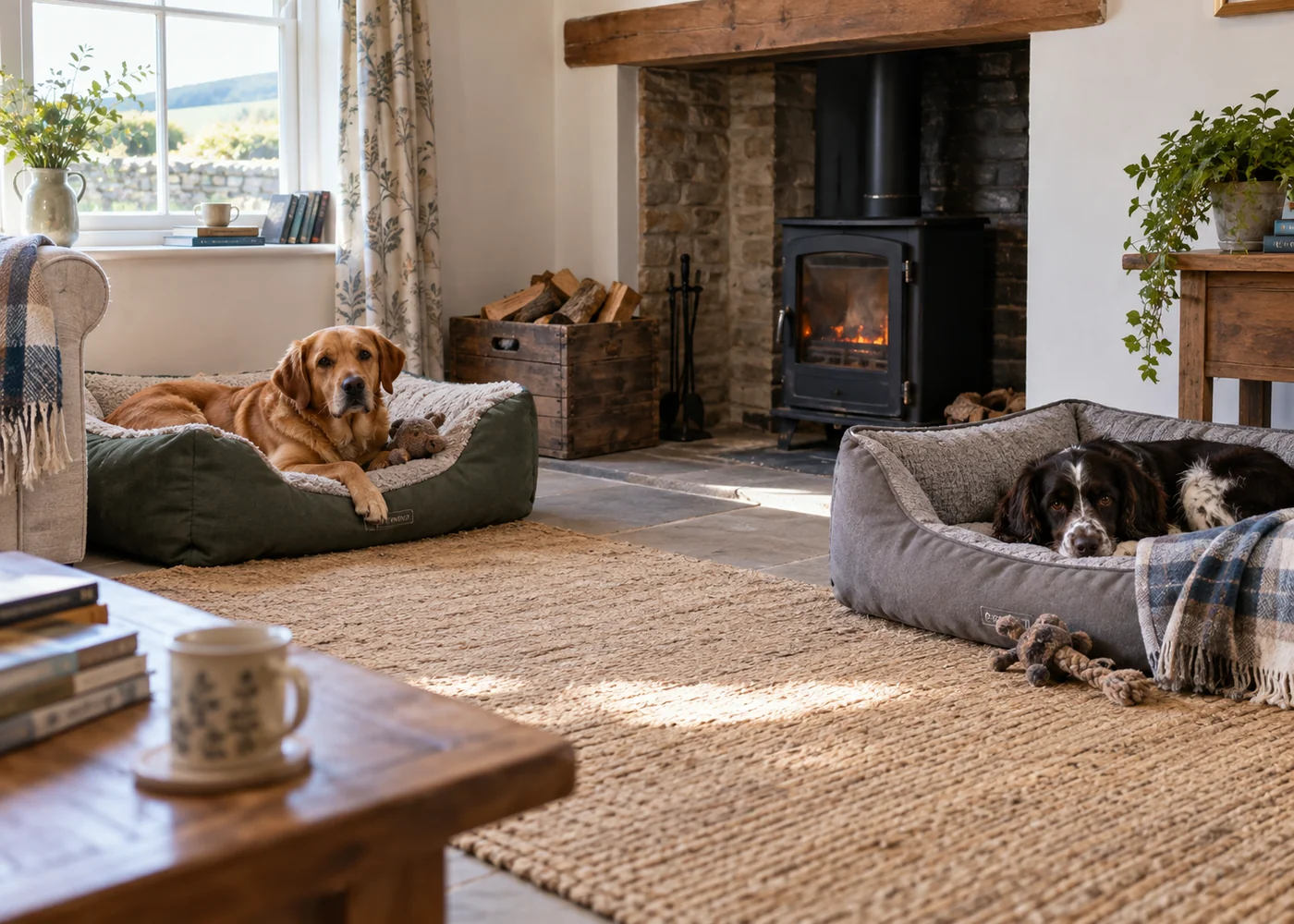
Sleeping places should be planned individually. Bring familiar beds and leave a sensible gap between them rather than fitting both into the only decorative alcove. Notice routes to the bathroom and external doors. One dog may prefer to stay near people while the other seeks a quieter corner. The cottage need not reproduce your home exactly, but it should allow an arrangement you can recognise as workable.
Ask about the garden and the route to it, including shared gates and neighbouring animals. Two dogs can make an open doorway busier to manage. Decide who will take each lead before unloading or returning from a walk. Do not depend on the garden being escape-proof, and do not introduce temporary barriers without the host's permission. A clear human routine is often more useful than trying to adapt the building.
Duplicate essentials, not everything
Each dog should have the familiar items needed for their normal routine, particularly food arrangements and bedding. Label food containers if the contents or portions differ, so another adult can help without guessing. Keep any prescribed care instructions separate and follow professional advice. There is no need to double every toy or travel accessory if that simply fills the floor with things no one can find.
Feed the dogs in the way that works at home, using the available rooms appropriately. Avoid squeezing bowls together to keep the kitchen looking tidy. Clear away afterwards and store food where it belongs. If children or visiting friends are part of the group, make sure they know which areas should be left alone during feeding and rest. A short explanation prevents well-meant interference with an established routine.
Keep each dog's equipment recognisable when more than one household is involved. A lead, coat or food container can look similar to another when unpacked in a hurry. Using the items each dog already has is preferable to swapping them casually because they are nearest the door. Explain the arrangement once to anyone helping, then store things in the same place after each use.
Share responsibility explicitly
Work out who is responsible at the start and end of each day. It is easy for two adults to assume that the other has taken both dogs out, or for one person to manage all the wet towels while everyone else starts breakfast. Agree a simple division that reflects the dogs' needs and the adults' plans. It does not need a detailed rota unless the group would find one helpful.
On days out, check that venues accept the number of dogs you are bringing, not merely that they display a pet-friendly symbol. A small café table or narrow entrance may be awkward for a pair even when entry is allowed. Keep the day's plan flexible and include somewhere comfortable to return. The house is part of the holiday, so there is no need to spend every hour away from it.
Before leaving, allow a little more time for bedding, bowls and the places where hair collects. Check that both sets of equipment have been packed and that neither dog's familiar blanket is drying behind a door. A two-dog holiday works best when the small practical tasks have owners of their own, leaving the rest of the day free from repeated decisions.