Can you really walk from the front door?
A footpath somewhere nearby is not the same as a comfortable walk beginning at the cottage gate.
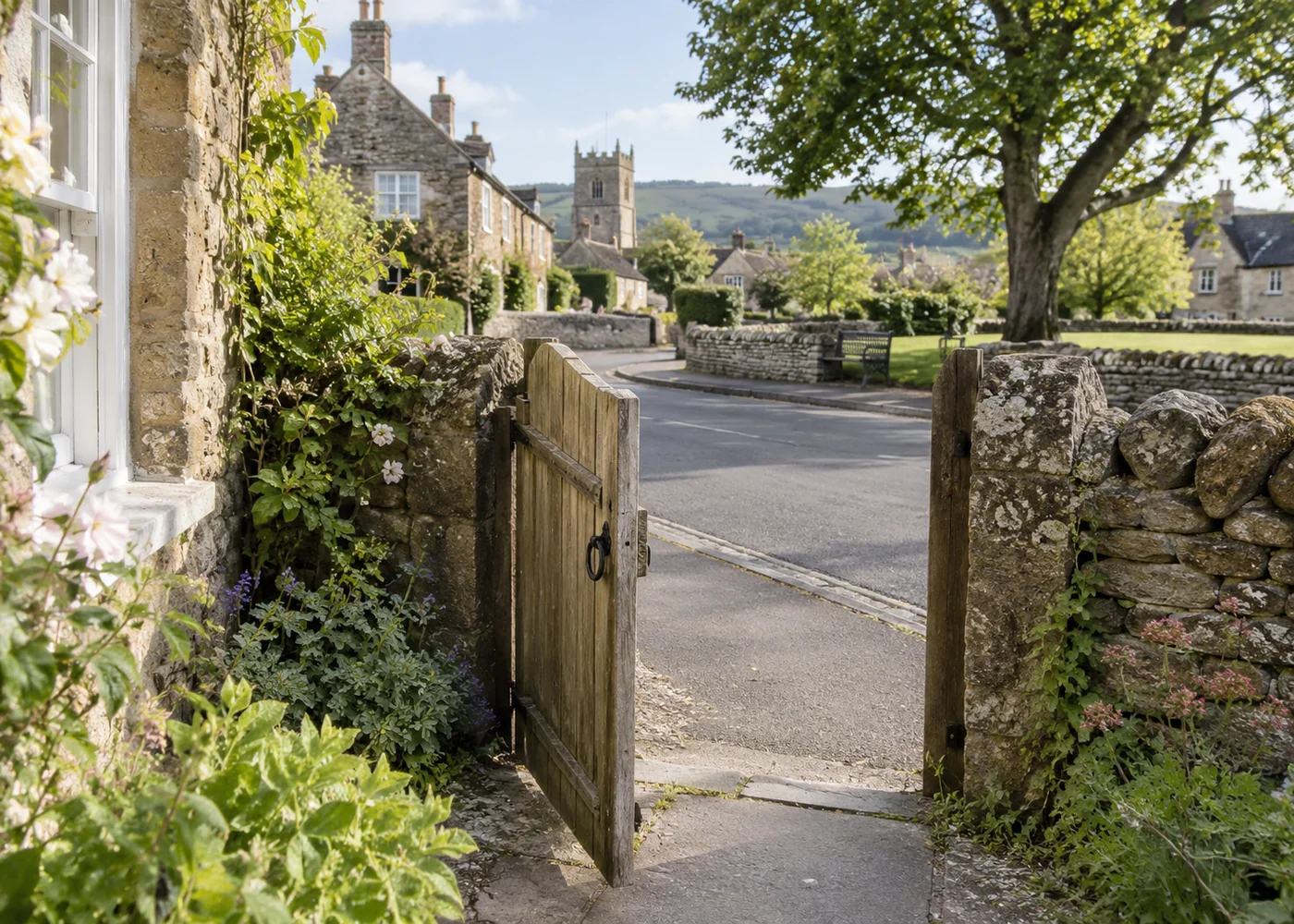
Inspect the first part
Start with the connection between the property and the walking route. Is there a pavement, a public path, or a stretch of road? A cottage described as close to trails may still require a drive to a sensible starting point. Ask the owner to explain the beginning of a typical walk, rather than just its destination.
Use current mapping to understand the route, but do not treat a line on a map as a complete description of conditions. Access points, surfaces and temporary restrictions can change. Check the relevant local information before setting out, especially where a particular route is central to your plans.
For a village stay, distinguish a pleasant stroll to a shop from a route that follows a busy lane. The distance alone says little about whether you will enjoy repeating it with groceries, children or a dog. If there is no useful detail in the listing, ask what the walk actually involves.
Match the route to the group
Think about gradients, gates, stiles and ground conditions. A short route can still be demanding for someone who needs an even surface. Equally, a longer level path might be a better fit. Ask for the specific features that affect your group instead of relying on labels such as “easy” or “family-friendly”.
Consider how you will return when tired. A downhill start means a climb later, and an outward route that feels manageable in daylight may be less appealing after dinner. Plan walks around the conditions and your abilities, not around the desire to avoid using the car at all costs.
If you intend to walk to a pub or restaurant, check current opening arrangements directly and think about the return journey separately. A nearby venue does not make an unlit road a suitable evening walking route.
Keep an alternative
Being able to leave the car behind is a lovely feature, but it should be supported by a workable plan. A nearby trailhead with suitable parking may still offer excellent walking even if the cottage's immediate lane is unsuitable.
Ask whether the property has a place for muddy footwear and wet coats, since daily walks bring a small amount of practical aftermath. A porch or utility area can be as useful as the distance to the path.
Before booking, decide whether door-to-door walking is essential or simply desirable. If it is essential, resolve the first stretch carefully. The most important hundred metres of the holiday may be the part that never appears in the landscape photographs.