Keep a useful second plan for changeable weather
Keep one useful alternative that suits the group and the location, so a changed forecast becomes a decision rather than a scramble.
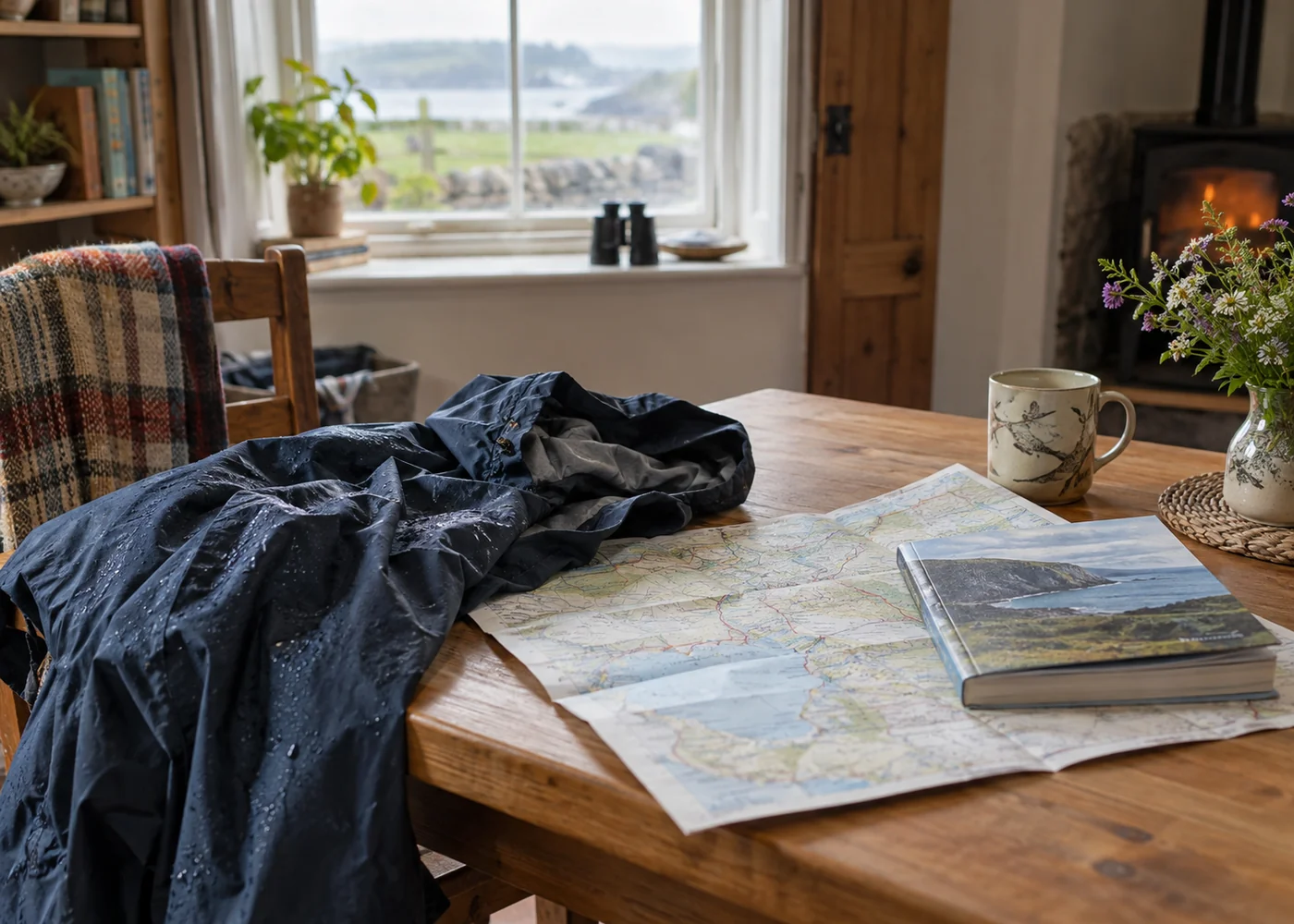
Decide what the original plan depends on
Look at the conditions that matter to the activity, not just a sunshine symbol. Travel, exposure, access and the group's abilities may all affect the decision. Use current local information and relevant specialist guidance where needed. The Met Office's travel advice is one official starting point for checking how weather may affect the journey, but an activity can require its own more specific information.
Identify any fixed booking and read its current terms before making assumptions about changes. Do not confuse wanting to alter the day with an automatic entitlement to a refund or new time. Ask the provider about options where necessary. This practical check belongs alongside the weather decision, without allowing money already spent to become a reason to continue with an unsuitable plan.
Choose an alternative you actually like
A useful second option may be smaller than the first: a nearby indoor visit, a different meal or time at the cottage. It does not need to match the original outing in distance, cost or novelty. Choose something the group would willingly do, then verify opening times or booking needs if it relies on a venue. A closed alternative is only another untested idea.
Consider the journey to that option. A long drive in the same conditions you are trying to avoid may not improve the day. The cottage itself can be the simplest alternative if you have brought a few familiar activities and suitable food. That is one reason to choose a property whose indoor spaces you enjoy rather than viewing it only as somewhere to sleep.
Keep care arrangements and different preferences clear. Some guests may still have a suitable smaller outing in mind while others stay in. Agree transport and responsibility for children or dogs explicitly. A changed plan should not silently make one person responsible for everyone else's needs because they happen to remain at the property.
Keep the alternative's practical items accessible. A book packed beneath every coat or an indoor venue address saved only in an old message is less useful when the plan changes. You need not pack for every possibility; just make the chosen second option easy to start. That turns flexibility into something the group can actually use rather than a reassuring phrase in the itinerary.
Make the decision early enough to be useful
Check conditions at an appropriate point before departure and agree when the group will decide. Repeatedly reopening the question while people pack can consume the morning. Once a sensible choice has been made, use the day rather than continuing to compare it with the forecast you hoped for. You can reassess if circumstances materially change without treating every passing cloud as a new planning meeting.
Have an ordinary meal option available and keep the cottage usable. Clear wet equipment from living areas, put bags away and bring out only the activities you need. A comfortable room is more inviting than a house left in a state of permanent readiness for an outing that is no longer happening.
Record a favourite cancelled idea for another visit if you wish, then let it go for this one. The aim of a second plan is not to guarantee the perfect holiday regardless of weather. It is to preserve choice, comfort and useful time together when the first idea no longer fits the day.
If the group has different opinions about changing the plan, return to the practical facts: current information, the activity's requirements and the available alternatives. Avoid treating caution as a lack of holiday spirit or enthusiasm as evidence of suitability. Choose an arrangement everyone responsible can support, splitting into suitable smaller plans only when transport and care responsibilities genuinely allow it. A clear decision is more useful than a reluctant agreement reached because time is running out.